
HYMN FOR SECOND SUNDAY AFTER PENTECOST The Summons

Updated: Jun 29
Text: John Bell. Tune: Irish folk
(For reasons of copyright, I cannot display the text, but it is found in almost every contemporary hymnal today.)

REFLECTION
The Calling of Matthew is one of the most dramatic in the gospels. Jesus appears and sees Matthew in the counting house with the worst of the worst according to the Judean people of the day. He is a traitor to them, serving himself and the Roman government. One could hardly go lower in the opinion of the people around Jesus. Still he walks in, calls Matthew to follow him, and Matthew stands up and leaves everything behind to follow. The call has utterly changed him. He is the kind of person Jesus says he came to serve—he came to minister to sinners, he announces at the dinner after the calling.
After the dinner, he will raise Jairus' daughter from the dead and heal the woman with the isue of blood. Matthew will be there to see who Jesus is. Jesus call to Matthew is paradigmatic. All of us are sinners, sinners are all God has to work with. In the story of
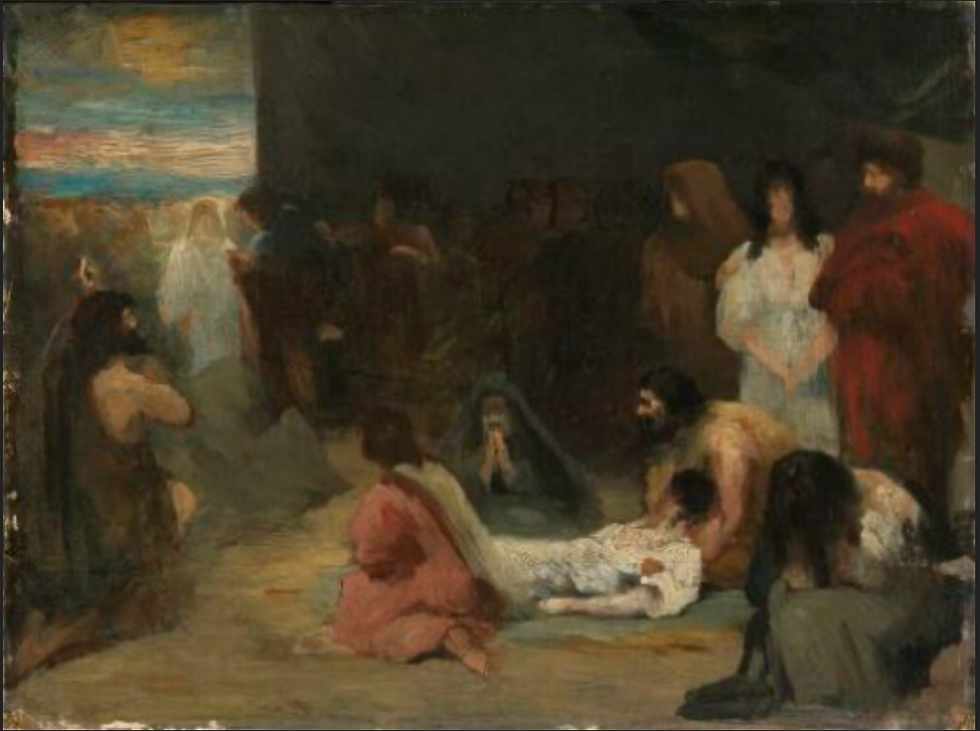
Matthew and all the other disciples, we see Jesus showing us what it means to follow him. They see him, healing the sick, feeding the hungry, casting out demons, stilling the storm, raising the dead and teaching. As they follow they are gradually being made into disciples—remember Jesus says in his calling to Andrew and Peter that he will make them fishers of men. As they follow, they become salt, light, a city on the hill. And when Jesus leaves and gives the great commission at his ascension, he commands them to baptize in the name of the Father, Son and Holy Spirit, and teach all things that he has taught them.
Today many think that means the have a set of goals for transforming the world, but Jesus is not saying that, he says go to your neighbor, the person next to you, and wherever you go you will be bringing Christ with you and he will transform those who hear his word and see his work. To serve the neighbor is to love them. And that means, in Jesus’ terms, to respond in love to the needs of those present to us, not with a set of programs, but actual help for them. In today’s world of efficiency, we make abstractions about what people need and design programs that serve not an individual, but some abstraction. That misses the point: programs dehumanize and make the neighbor abstract. We are to be present to the neighbor and trust that in our own beings Christ is present and leading us to know what the person standing before us needs. Matthew will be learning this in his three year schooling with Jesus. An exciting thought: every encounter is a new one with Christ who inhabits our world in everyone we meet.
HYMN INFO
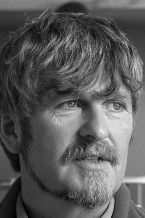
John Bell has been something of the guru of recent contemporary hymnody over the past quarter century. A Scottish pastor and at one time serving the Iona community, he has been noted especially for his use of Celtic folk tunes for his texts. These folk tunes which seem washed in the deep blue waters of the turbulent North Sea can make almost any text sound great, but Bell’s skill with a text, especially in the repetitions one finds in this text, works especially well with this gorgeous Scottish tune.
Bell, born in Kilmarnock in Ayrshire, had musical talent from the beginning and intended to a music teacher, but a call to the ministry, especially to serve the poor, changed the direction of his life. He served as associate pastor at the English Reformed Church in Amsterdam. From there he returned to the Church of Scotland as a youth pastor. He began writing hymns along with his colleague Graham Maule, when he realized there were no hymns on various topics central to the Christian faith. This has become one of the most popular of his hymns and can be found in most contemporary hymnals around the world. It is all about what it means to follow Christ. Note too that it is from the point of view ofJesus who is the speaker calling us, something recent hymns have done, and oddly, many on the call of God to the Christian, such as "I, the Lord of Sea and Sky," and "Borning Cry."
LINKS
Chet Valley Churches (see the lyrics here)
First Plymouth Church Lincoln Nebraska
The University of Notre Dame Folk Choir
Orchard Enterprises



Comments